By Adrian Walker, Globe Staff | November 25, 2008
The federal corruption investigation unfolding in City Hall and on Beacon Hill began not with self-righteous fury, but simple frustration. Ron Wilburn's attempts to get a liquor license for a Boston nightclub were met with the kind of soul-numbing political obstacles that he felt made it virtually impossible for an outsider to get a fair hearing.
Wilburn wasn't an insider with the city licensing officials, so he became one with the FBI.
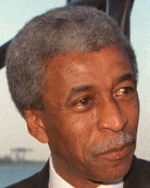
Wilburn, in his first news media interview, acknowledged yesterday that he was the cooperating witness who handed state Senator Dianne Wilkerson and Boston City Councilor Chuck Turner wads of neatly folded cash that federal authorities allege were bribes. And he pointedly said he does not expect the investigation, in which he played a central role, will end there.
"If other people aren't looked at, realistically, something is radically wrong with the process," Wilburn said yesterday.
As Turner stood on City Hall Plaza yesterday, lashing out at the news media and his colleagues on the council, Wilburn sipped a cup of coffee in a Back Bay steakhouse and talked matter-of-factly about the unusual role that has come to be the defining event in his life.
He is 69 years old, a respected businessman in Boston's predominantly black neighborhoods, a mentor to young minorities. Yet he has little sympathy for the two politicians - both of them black - who have already been ensnared in the investigation he has helped drive.
"People do things," Wilburn said. "There are decisions, there are choices, and there are consequences." Asked if he was surprised that public officials would allegedly take money to help push a liquor license, he responded quickly. "Hell, no," and let out a hearty laugh.
Wilburn said the idea of opening an upscale supper and jazz club, to be called Dejavu, began to take hold in 2006. But he was rebuffed by the Boston Licensing Board when he sought a liquor license and was frustrated by what he describes as a politicized and antiquated licensing process.
"You're dealing with favoritism, cronyism, classism, and if you don't have the right connections it's very difficult to make things happen," Wilburn said. "The average person that works hard and has a plan to get a license, it's very hard for them to move through that system. And you find out if you have the right people pushing the buttons, things can happen fast."
Wilburn, a trim man nattily attired in an Oxford shirt, tie, and vest, declined to discuss the details of delivering the alleged bribes - how he felt in the lens of surveillance cameras, the sensation of being wired by federal agents. He said repeatedly, "The affidavit speaks for itself," adding, "It reads like the script of a Spike Lee movie."
Wilburn said that federal agents approached him, though he was vague about the circumstances, saying only that they were curious about "political donations." He specifically rebutted one allegation made by FBI agents, that he told investigators that Wilkerson routinely took payments from people having business before the Senate. He said he had no such knowledge. Otherwise, he said, the 32-page affidavit that accompanied Wilkerson's arrest speaks for itself.
Wilburn said he did not become an informant because he was under investigation or implicated in any crimes. "I'm not smuggling guns, and I'm not a drug dealer," he said laughingly. "I was not forced or coerced."
Indeed, in a Globe story that first identified him as the cooperating witness, or "CW" in the federal affidavit, those who knew him described Wilburn as a "gentleman" with a "mature" bearing who was widely known as an enterprising figure in Boston's black business community. He had grown to be something of a friend and political supporter of Wilkerson in particular, hosting fund-raisers for her at a nightclub he was managing. He was a political contributor to Wilkerson as well.
Yesterday, Wilburn stressed that he had few dealings with Turner, and no ax to grind against either Wilkerson or Turner.
While he insists that he cooperated freely, Wilburn makes no secret of feeling burned by the federal government. The affidavit released the day of Wilkerson's arrest left little doubt that Wilburn was the cooperating witness, or "CW."
"It may as well have said RW," he said, referring to his initials. "They gave me up. It usually goes to the grand jury, and then an indictment is handed down. It didn't happen that way, and who was exposed? Me. I didn't take any bribes, OK? All I was trying to do was get a license."
While Wilburn suggested that the probe may have targets beyond those already charged, he declined to name them.
"I did this not to expose anybody or entrap anybody, but just to expose how the system works," he said.
While some observers have speculated that the case could undermine a generation of black political leadership, Wilburn seemed unfazed by the prospect. "If that happens, it happens," he said. "If there was group involvement, it is what it is."
Rather, he believes that a new generation of leadership might be a healthy development. "There is no entitlement here," Wilburn said. "There needs to be an infusion of new ideas. The whole political situation needs to be looked at. You need new people. I'm an old guy. You need young people, a new generation with new ideas."
Wilburn says he is out of the nightclub business. By the time Dejavu got a full liquor license last March, economic concerns had sunk the project. He describes himself as semiretired, though he said he is looking at two business deals. Neither, he said, involves a liquor license.
Adrian Walker can be reached at walker@globe.com.


No comments:
Post a Comment
Note: Only a member of this blog may post a comment.