Showing posts with label moojaboos. Show all posts
Showing posts with label moojaboos. Show all posts
Thursday, January 19, 2017

Thursday, July 30, 2009
President of black sorority Alpha Kappa Alpha sued by members over funds, including $900,000 wax statue

Members of Chicago-headquartered Alpha Kappa Alpha Sorority are suing to oust their president -- former Chicago Housing Authority comptroller Barbara McKinzie, left, who had a wax figure made of herself, shown right.
Sunday, July 5, 2009
Thursday, December 18, 2008

Saturday, December 6, 2008
War On Dumb - Leapin’ Larry fights the feds
FROM: Birmingham Weekly
Langford indictment sets in motion momentous legal battle
By: Kyle Whitmire
Every year the Birmingham Regional Chamber of Commerce takes local leaders on a trip. The chamber calls it the “Big Trip,” an opportunity for our business and political elite to see a city similar to Birmingham, only more functional. There are panel discussions and seminars, mostly on municipal issues — transportation, economic development and the like. It was on one of these trips three years ago, to Nashville, that I saw some things that explain a lot about our mayor, Larry Langford.
One of the panel discussions focused on “diversity.” Despite the billing, there was no Asian panelist, no Latino, no gay. Instead, there were five black business leaders talking a lot about getting into restricted country clubs. One panelist, Tennessee commissioner of financial institutions Kevin Lavender, called Birmingham the most racist city in the country. He based his assessment on how he was treated here by a gas station attendant and his experience as a lunch guest at the Birmingham Country Club.
“I don’t care for your city because of those experiences that I’ve had in the last four or five years in Birmingham,” Lavender said.
Only one member of the Birmingham delegation defended the city. Then-County Commission President Langford blasted Lavender and the panelists. He invited them to visit Birmingham, because the city they described was not the city Langford knew, he said.
“And if I had $35,000 in disposable income, I damn sure wouldn’t give it to no golf club,” he said.
The panelists were suddenly silent. Langford received a standing ovation. The most hardened Birmingham cynic would have struggled to hold down an Amen or Hell, yeah. Had the mayoral election been held that day, I’m certain most of the people in that room would have voted for him, with the exception of then-Mayor Bernard Kincaid, who remained silent and inert through the Birmingham-bashing.
Afterward, outside Langford pulled on a cigarette while holding court with the other smokers.
“I’m not going to let that kind of bullshit stand,” Langford said. “Hell, I can go to Cullman and people don’t treat me like that.”
In the last year, I’ve heard a lot of people denigrating Birmingham voters for electing Langford mayor, sometimes in offensive and even racist terms — poor, ignorant, black. To that, I usually tell them this story and remind them of one important point — Langford had support from many demographics, including the most prominent CEOs in Birmingham. It wasn’t ignorance, class or race that seated Langford at City Hall. Rather, it was Birmingham’s insecurity complex.
Whether he’s defending the city against some snotty outsider or lecturing single parents about buying kids designer clothes, Langford deftly manipulates Birmingham’s confidence or lack thereof. There’s an emotional tug-of-war in this city’s heart, with pride on one side and shame on the other, and somewhere in the middle the mayor keeps one hand on the rope. As long as there is tension in that line, Langford is in control. Birmingham’s insecurity gives him his political power.
Political power is a tricky thing, though, and Langford has a complex of his own that complicates how he wields it. It’s easy but wrong to believe that money is power. In fact, money corrupts power. In his biography of Richard J. Daley, the late Chicago columnist Mike Royko attributed that mayor’s success to one basic idea: In politics, you can have power or you can have money, but you can’t have both. Daley let others make the money while he horded the power. He figured out what many other public officials missed. You can’t sell power and retain it at the same time. Once bought, always beholden. To attempt both is to mix a witches’ brew. Langford doesn’t seem to have learned that lesson.
At a cocktail party on that same trip to Nashville, I asked Langford about a rumor I’d heard — that HealthSouth CEO Richard Scrushy had bought him a $10,000 leather jacket for Christmas. Langford didn’t deny it. Instead, he became contemptuous of the question.
“People are always asking me about my clothes,” he said. “What am I supposed to wear? I don’t wear no cheap shit from J.C. Penny.”
Langford’s impulsiveness is as much a habit of his personal life as in his politics. At some point, most children decide that when they grow up they will eat only ice cream and cookies, but only Langford followed through on that promise. (That’s hardly an exaggeration. It’s well known among his friends and hangers-on that ice cream and cookies are staples of his diet.)
But when it comes to tastes beyond his palate, Langford is neither modest nor frugal. He drives a Cadillac Escalade, tells time with a Rolex and wears clothes few of his constituents could ever afford.
As it turns out, neither could he. Three years after that cocktail party in Nashville, Langford’s fondness for high-end fashion and his contempt for off-the-rack suits have led him into a dangerous place — the crosshairs of the federal government and the target of a 101-count indictment. The prosecutors’ accusation is simple even if the alleged scheme is not: Langford sold the power of his office for some really nice clothes.
*****
On Monday, Langford appeared in court wearing a brown sweater vest over a Burberry plaid shirt that retails for about $200. The shackles were free.
His arrest that morning seems to have surprised him, but it wasn’t unexpected. Birmingham’s political spectators have speculated for months on when the federal grand jury’s investigation would nab the mayor. The answer was Monday. On his way to Birmingham Budweiser, where he works in public relations, Langford noticed a sedan following him. When he reached the office parking lot, federal authorities took him into custody.
Word spread quickly that Langford had been arrested. Lawyers for his two co-defendants, Montgomery investment banker Bill Blount and lobbyist Al LaPierre, arranged for their less dramatic surrender. That piqued Langford’s lawyers, who later accused the Justice Department of being excessive with their client.
LaPierre, also with shackles on his ankles, faced the magistrate with Langford. Blount, who had to drive from Montgomery, appeared in court later.
The bond hearing and arraignment were mechanical, automatic and staid. The magistrate gave LaPierre and Langford each a $50,000 bond. Blount received a $100,000 bond. Because of his personal finances, Langford’s bond was unsecured. All three defendants waived their right to hear the indictment read and each pleaded not guilty, the only plea allowed in an initial appearance in federal court.
On the steps of the Hugo Black federal courthouse, Langford stood silently with his hands in his pockets as his attorney, Tom Baddley, spoke for him to the media scrum.
“Mayor Langford, I’m sure, would love to speak for one hour to every one of you, but we have asked him not to,” Baddley said. “Of course, if you know Larry, he doesn’t like that, but he’s not going to discuss it.”
According to Baddley, Langford had taken a polygraph test and passed. The defense had offered that information to the prosecutors and the grand jury, but they had not accepted it. Further, Langford had even offered to take a polygraph administered by the Justice Department, but the Justice Department had shown no interest, he said.
“Unfortunately other people have been allowed to surrender and take their time and Mayor Langford was arrested,” Baddley said. “He was put in shackles and here we stand today. It’s a terrible thing.”
While his lawyer spoke for him, cars honked at the mayor and he waved back at them.
“We love you,” one passerby shouted.
Langford, who had to leave his coat in his car when he was arrested, shivered and said, “I’m freezing.” The lawyers escorted their client away from the courthouse.
*****
The arrest and hearing were nearly identical to any other public corruption arraignment. The key item of interest Monday was the 101-count indictment.
A rough sketch of the indictment was already public knowledge. There was little in it that hadn’t been reported in the newspapers two or three years ago. However, its detail and specificity are a stark contrast to Langford’s past equivocation.
Some of the back-story was already laid out in the Securities and Exchange Commission’s lawsuit against the three defendants.
In 2002, Langford was elected to the Jefferson County Commission. He defeated Jeff Germany, who was under investigation for public corruption, himself. Shortly after the election, the SEC said, Langford approached LaPierre and Blount for a loan. He had accumulated $70,000 in debt, much of it in clothing store credit, the SEC has said.
Gus Mayer, an upscale clothing store in Homewood, sued Langford for unpaid bills. According to the SEC, Blount arranged for Langford to receive a six-month $50,000 unsecured loan from Colonial Bank, where Blount’s then-girlfriend worked. She approved the loan, which Langford used to pay his debts. However, Langford defaulted on the loan. LaPierre, in turn, borrowed $50,000 from the same bank, which he used to pay Langford’s note. According to both federal investigations, Blount later gave LaPierre the money he needed to repay the loan.
Despite his trouble repaying the loan from Colonial, he told SEC investigators in 2007 that he went back to the bank to borrow more money. Instead of a bank loan, however, Blount and LaPierre gave Langford $69,000 directly. According to the indictment, Langford used $12,000 of that money to pay for audio equipment from Likis Audio, and he paid another $12,000 to Shaia’s, an upscale men’s clothing store in Homewood. Langford deposited the remaining $45,000 in a personal bank account. In his SEC deposition, Langford said he needed the money to pay for dental bills. The indictment does not indicate how Langford spent the remaining $45,000.
The indictment does include new information about payments LaPierre and Blount made to Langford. In 2004, the men gave Langford $30,000 to pay his taxes.
And then there’s more clothes.
In his 2007 deposition with SEC investigators, Langford said Blount might have bought him a birthday gift on a trip to New York. The investigators asked him if he’d ever paid for anything else. Langford said he had not.
The following comes from Langford’s 2007 deposition with SEC investigators.
Q: “Has Mr. Blount ever paid any expenses on your behalf?”
A: “Like?”
Q: “Like any expenses at all, besides dinner or something; a credit card expense, a bill at a store; I mean any expenses over say $100 on your behalf?”
A: “Not that I remember. He maybe bought a shirt and tie once, but I bought him a shirt and a tie and a sport coat. So I couldn’t really say for certain, but we’ve exchanged gifts, and I know I’ve given him more than he’s ever given me.”
In fact, between 2003 and 2007 Blount and LaPierre paid about $88,000 for clothes, watches and jewelry for Langford, the indictment says. Most of the purchases were at Remon’s in downtown Birmingham, but at least six of them were at boutiques in New York.
Of 27 total purchases, only one was made in March. Langford’s birthday is March 17, St. Patrick’s Day.
All totaled, Langford received more than $236,000 in cash, clothes and jewelry from Blount and LaPierre. Almost all of the money originated from Blount, the indictment says. LaPierre served as a pass-through.
At the same time Blount and LaPierre were paying for Langford’s fashions, Langford was arranging lucrative bond work for Blount’s Montgomery investment bank, Blount Parrish. The indictment depicts an incremental give-and-take, with Langford, then-commission president and chairman of the county finance committee, directing work to Blount as Blount directed cash and gifts to him. On several occasions Langford required major investment banks, including JP Morgan and Goldman Sachs, to include Blount in bond deals and interest rate swaps.
During Langford’s tenure on the Jefferson County Commission, Blount Parrish received more than $7 million for the work.
At the time, Langford described these complicated interest rate swaps to the public as “refinancing,” like many households do to take advantage of lower interest rates. In fact, the deals were much more sophisticated, so much so that only a few finance specialists truly understood them. Langford bragged that the deals would save the county millions, but since then those deals have backfired, leaving Jefferson County teetering on the brink of bankruptcy.
By 2007, Langford would plead ignorance in his SEC deposition. He told investigators he wouldn’t know a swap advisor from a rubber band and that he depended on the county’s finance director and financial advisors to distinguish the good deals from bad.
*****
The mayor’s lawyer, Baddley, has been friends with Langford for nearly 30 years. When federal investigators began sifting through the Jefferson County bond deals, Langford turned to Baddley for help.
Against Baddley’s advice, Langford gave his sworn deposition to SEC investigators with only a county lawyer at his side. Langford has since said he should have heeded Baddley’s advice.
Langford’s defense against these charges will be straightforward. Baddley says they will argue that Langford never knew the money he received from LaPierre was coming from Blount. Langford assumed LaPierre had the money to make the personal loans between friends and that Langford intended to pay off the loans. Langford was embarrassed to have put himself in such a tight spot, so he didn’t report the loans on his filings with the Alabama Ethics Commission. That was a mistake, Baddley argues, but an understandable one.
It might be a struggle to persuade a jury, though. SEC documents show that there is at least one email between Langford and Blount about his loan at Colonial Bank. What’s more, that argument does not account for the thousands of dollars worth of clothes from Remon’s paid for with Blount’s credit card.
As for the business Langford directed to Blount, Baddley says that it was customary for the five commissioners to divide bond work equally, giving it to banks and brokers of their choosing. In this aspect, he is correct. The commission had been divvying out bond business that way long before Langford got there.
Furthermore, he says that it was only logical that Langford would involve someone he has known and trusted for 30 years — Blount.
One leftover curiosity from Monday is what wasn’t in the indictment. There have been other aspects of the grand jury investigation separate from Langford’s dealings with Blount. Witnesses have appeared to testify about various charities Langford has run, a multi-level marketing business Langford has with his wife selling phone service, and gambling Langford did at VictoryLand in Shorter, Ala. The same special grand jury indicted Langford’s friend, John Katopodis, on charges he misused funds from a charity they co-founded with Richard Scrushy, Computer Help for Kids.
However, when the indictment was unsealed Monday, there was only one spoke on the wagon wheel — the Blount, Langford, LaPierre conspiracy charges.
Baddley would not speculate on other aspects of the federal investigation, nor would United States Attorney Alice Martin comment on what else they might be looking at, except to say that the investigation is continuing.
Tuesday night in Linn Park, Langford moved through a crowd at the Birmingham Christmas parade. As marching bands performed in the street, he glad-handed supporters and climbed onto the stage where a few minutes later he would flip a ceremonial switch to light the city’s Christmas tree. Speaking to the crowd, he broke the palpable tension with a joke.
“After yesterday, I need a Merry Christmas,” he said.
War on Dumb is a column about political culture. Write to kyle@bhamweekly.com
Langford indictment sets in motion momentous legal battle
By: Kyle Whitmire
Every year the Birmingham Regional Chamber of Commerce takes local leaders on a trip. The chamber calls it the “Big Trip,” an opportunity for our business and political elite to see a city similar to Birmingham, only more functional. There are panel discussions and seminars, mostly on municipal issues — transportation, economic development and the like. It was on one of these trips three years ago, to Nashville, that I saw some things that explain a lot about our mayor, Larry Langford.
One of the panel discussions focused on “diversity.” Despite the billing, there was no Asian panelist, no Latino, no gay. Instead, there were five black business leaders talking a lot about getting into restricted country clubs. One panelist, Tennessee commissioner of financial institutions Kevin Lavender, called Birmingham the most racist city in the country. He based his assessment on how he was treated here by a gas station attendant and his experience as a lunch guest at the Birmingham Country Club.
“I don’t care for your city because of those experiences that I’ve had in the last four or five years in Birmingham,” Lavender said.
Only one member of the Birmingham delegation defended the city. Then-County Commission President Langford blasted Lavender and the panelists. He invited them to visit Birmingham, because the city they described was not the city Langford knew, he said.
“And if I had $35,000 in disposable income, I damn sure wouldn’t give it to no golf club,” he said.
The panelists were suddenly silent. Langford received a standing ovation. The most hardened Birmingham cynic would have struggled to hold down an Amen or Hell, yeah. Had the mayoral election been held that day, I’m certain most of the people in that room would have voted for him, with the exception of then-Mayor Bernard Kincaid, who remained silent and inert through the Birmingham-bashing.
Afterward, outside Langford pulled on a cigarette while holding court with the other smokers.
“I’m not going to let that kind of bullshit stand,” Langford said. “Hell, I can go to Cullman and people don’t treat me like that.”
In the last year, I’ve heard a lot of people denigrating Birmingham voters for electing Langford mayor, sometimes in offensive and even racist terms — poor, ignorant, black. To that, I usually tell them this story and remind them of one important point — Langford had support from many demographics, including the most prominent CEOs in Birmingham. It wasn’t ignorance, class or race that seated Langford at City Hall. Rather, it was Birmingham’s insecurity complex.
Whether he’s defending the city against some snotty outsider or lecturing single parents about buying kids designer clothes, Langford deftly manipulates Birmingham’s confidence or lack thereof. There’s an emotional tug-of-war in this city’s heart, with pride on one side and shame on the other, and somewhere in the middle the mayor keeps one hand on the rope. As long as there is tension in that line, Langford is in control. Birmingham’s insecurity gives him his political power.
Political power is a tricky thing, though, and Langford has a complex of his own that complicates how he wields it. It’s easy but wrong to believe that money is power. In fact, money corrupts power. In his biography of Richard J. Daley, the late Chicago columnist Mike Royko attributed that mayor’s success to one basic idea: In politics, you can have power or you can have money, but you can’t have both. Daley let others make the money while he horded the power. He figured out what many other public officials missed. You can’t sell power and retain it at the same time. Once bought, always beholden. To attempt both is to mix a witches’ brew. Langford doesn’t seem to have learned that lesson.
At a cocktail party on that same trip to Nashville, I asked Langford about a rumor I’d heard — that HealthSouth CEO Richard Scrushy had bought him a $10,000 leather jacket for Christmas. Langford didn’t deny it. Instead, he became contemptuous of the question.
“People are always asking me about my clothes,” he said. “What am I supposed to wear? I don’t wear no cheap shit from J.C. Penny.”
Langford’s impulsiveness is as much a habit of his personal life as in his politics. At some point, most children decide that when they grow up they will eat only ice cream and cookies, but only Langford followed through on that promise. (That’s hardly an exaggeration. It’s well known among his friends and hangers-on that ice cream and cookies are staples of his diet.)
But when it comes to tastes beyond his palate, Langford is neither modest nor frugal. He drives a Cadillac Escalade, tells time with a Rolex and wears clothes few of his constituents could ever afford.
As it turns out, neither could he. Three years after that cocktail party in Nashville, Langford’s fondness for high-end fashion and his contempt for off-the-rack suits have led him into a dangerous place — the crosshairs of the federal government and the target of a 101-count indictment. The prosecutors’ accusation is simple even if the alleged scheme is not: Langford sold the power of his office for some really nice clothes.
*****
On Monday, Langford appeared in court wearing a brown sweater vest over a Burberry plaid shirt that retails for about $200. The shackles were free.
His arrest that morning seems to have surprised him, but it wasn’t unexpected. Birmingham’s political spectators have speculated for months on when the federal grand jury’s investigation would nab the mayor. The answer was Monday. On his way to Birmingham Budweiser, where he works in public relations, Langford noticed a sedan following him. When he reached the office parking lot, federal authorities took him into custody.
Word spread quickly that Langford had been arrested. Lawyers for his two co-defendants, Montgomery investment banker Bill Blount and lobbyist Al LaPierre, arranged for their less dramatic surrender. That piqued Langford’s lawyers, who later accused the Justice Department of being excessive with their client.
LaPierre, also with shackles on his ankles, faced the magistrate with Langford. Blount, who had to drive from Montgomery, appeared in court later.
The bond hearing and arraignment were mechanical, automatic and staid. The magistrate gave LaPierre and Langford each a $50,000 bond. Blount received a $100,000 bond. Because of his personal finances, Langford’s bond was unsecured. All three defendants waived their right to hear the indictment read and each pleaded not guilty, the only plea allowed in an initial appearance in federal court.
On the steps of the Hugo Black federal courthouse, Langford stood silently with his hands in his pockets as his attorney, Tom Baddley, spoke for him to the media scrum.
“Mayor Langford, I’m sure, would love to speak for one hour to every one of you, but we have asked him not to,” Baddley said. “Of course, if you know Larry, he doesn’t like that, but he’s not going to discuss it.”
According to Baddley, Langford had taken a polygraph test and passed. The defense had offered that information to the prosecutors and the grand jury, but they had not accepted it. Further, Langford had even offered to take a polygraph administered by the Justice Department, but the Justice Department had shown no interest, he said.
“Unfortunately other people have been allowed to surrender and take their time and Mayor Langford was arrested,” Baddley said. “He was put in shackles and here we stand today. It’s a terrible thing.”
While his lawyer spoke for him, cars honked at the mayor and he waved back at them.
“We love you,” one passerby shouted.
Langford, who had to leave his coat in his car when he was arrested, shivered and said, “I’m freezing.” The lawyers escorted their client away from the courthouse.
*****
The arrest and hearing were nearly identical to any other public corruption arraignment. The key item of interest Monday was the 101-count indictment.
A rough sketch of the indictment was already public knowledge. There was little in it that hadn’t been reported in the newspapers two or three years ago. However, its detail and specificity are a stark contrast to Langford’s past equivocation.
Some of the back-story was already laid out in the Securities and Exchange Commission’s lawsuit against the three defendants.
In 2002, Langford was elected to the Jefferson County Commission. He defeated Jeff Germany, who was under investigation for public corruption, himself. Shortly after the election, the SEC said, Langford approached LaPierre and Blount for a loan. He had accumulated $70,000 in debt, much of it in clothing store credit, the SEC has said.
Gus Mayer, an upscale clothing store in Homewood, sued Langford for unpaid bills. According to the SEC, Blount arranged for Langford to receive a six-month $50,000 unsecured loan from Colonial Bank, where Blount’s then-girlfriend worked. She approved the loan, which Langford used to pay his debts. However, Langford defaulted on the loan. LaPierre, in turn, borrowed $50,000 from the same bank, which he used to pay Langford’s note. According to both federal investigations, Blount later gave LaPierre the money he needed to repay the loan.
Despite his trouble repaying the loan from Colonial, he told SEC investigators in 2007 that he went back to the bank to borrow more money. Instead of a bank loan, however, Blount and LaPierre gave Langford $69,000 directly. According to the indictment, Langford used $12,000 of that money to pay for audio equipment from Likis Audio, and he paid another $12,000 to Shaia’s, an upscale men’s clothing store in Homewood. Langford deposited the remaining $45,000 in a personal bank account. In his SEC deposition, Langford said he needed the money to pay for dental bills. The indictment does not indicate how Langford spent the remaining $45,000.
The indictment does include new information about payments LaPierre and Blount made to Langford. In 2004, the men gave Langford $30,000 to pay his taxes.
And then there’s more clothes.
In his 2007 deposition with SEC investigators, Langford said Blount might have bought him a birthday gift on a trip to New York. The investigators asked him if he’d ever paid for anything else. Langford said he had not.
The following comes from Langford’s 2007 deposition with SEC investigators.
Q: “Has Mr. Blount ever paid any expenses on your behalf?”
A: “Like?”
Q: “Like any expenses at all, besides dinner or something; a credit card expense, a bill at a store; I mean any expenses over say $100 on your behalf?”
A: “Not that I remember. He maybe bought a shirt and tie once, but I bought him a shirt and a tie and a sport coat. So I couldn’t really say for certain, but we’ve exchanged gifts, and I know I’ve given him more than he’s ever given me.”
In fact, between 2003 and 2007 Blount and LaPierre paid about $88,000 for clothes, watches and jewelry for Langford, the indictment says. Most of the purchases were at Remon’s in downtown Birmingham, but at least six of them were at boutiques in New York.
Of 27 total purchases, only one was made in March. Langford’s birthday is March 17, St. Patrick’s Day.
All totaled, Langford received more than $236,000 in cash, clothes and jewelry from Blount and LaPierre. Almost all of the money originated from Blount, the indictment says. LaPierre served as a pass-through.
At the same time Blount and LaPierre were paying for Langford’s fashions, Langford was arranging lucrative bond work for Blount’s Montgomery investment bank, Blount Parrish. The indictment depicts an incremental give-and-take, with Langford, then-commission president and chairman of the county finance committee, directing work to Blount as Blount directed cash and gifts to him. On several occasions Langford required major investment banks, including JP Morgan and Goldman Sachs, to include Blount in bond deals and interest rate swaps.
During Langford’s tenure on the Jefferson County Commission, Blount Parrish received more than $7 million for the work.
At the time, Langford described these complicated interest rate swaps to the public as “refinancing,” like many households do to take advantage of lower interest rates. In fact, the deals were much more sophisticated, so much so that only a few finance specialists truly understood them. Langford bragged that the deals would save the county millions, but since then those deals have backfired, leaving Jefferson County teetering on the brink of bankruptcy.
By 2007, Langford would plead ignorance in his SEC deposition. He told investigators he wouldn’t know a swap advisor from a rubber band and that he depended on the county’s finance director and financial advisors to distinguish the good deals from bad.
*****
The mayor’s lawyer, Baddley, has been friends with Langford for nearly 30 years. When federal investigators began sifting through the Jefferson County bond deals, Langford turned to Baddley for help.
Against Baddley’s advice, Langford gave his sworn deposition to SEC investigators with only a county lawyer at his side. Langford has since said he should have heeded Baddley’s advice.
Langford’s defense against these charges will be straightforward. Baddley says they will argue that Langford never knew the money he received from LaPierre was coming from Blount. Langford assumed LaPierre had the money to make the personal loans between friends and that Langford intended to pay off the loans. Langford was embarrassed to have put himself in such a tight spot, so he didn’t report the loans on his filings with the Alabama Ethics Commission. That was a mistake, Baddley argues, but an understandable one.
It might be a struggle to persuade a jury, though. SEC documents show that there is at least one email between Langford and Blount about his loan at Colonial Bank. What’s more, that argument does not account for the thousands of dollars worth of clothes from Remon’s paid for with Blount’s credit card.
As for the business Langford directed to Blount, Baddley says that it was customary for the five commissioners to divide bond work equally, giving it to banks and brokers of their choosing. In this aspect, he is correct. The commission had been divvying out bond business that way long before Langford got there.
Furthermore, he says that it was only logical that Langford would involve someone he has known and trusted for 30 years — Blount.
One leftover curiosity from Monday is what wasn’t in the indictment. There have been other aspects of the grand jury investigation separate from Langford’s dealings with Blount. Witnesses have appeared to testify about various charities Langford has run, a multi-level marketing business Langford has with his wife selling phone service, and gambling Langford did at VictoryLand in Shorter, Ala. The same special grand jury indicted Langford’s friend, John Katopodis, on charges he misused funds from a charity they co-founded with Richard Scrushy, Computer Help for Kids.
However, when the indictment was unsealed Monday, there was only one spoke on the wagon wheel — the Blount, Langford, LaPierre conspiracy charges.
Baddley would not speculate on other aspects of the federal investigation, nor would United States Attorney Alice Martin comment on what else they might be looking at, except to say that the investigation is continuing.
Tuesday night in Linn Park, Langford moved through a crowd at the Birmingham Christmas parade. As marching bands performed in the street, he glad-handed supporters and climbed onto the stage where a few minutes later he would flip a ceremonial switch to light the city’s Christmas tree. Speaking to the crowd, he broke the palpable tension with a joke.
“After yesterday, I need a Merry Christmas,” he said.
War on Dumb is a column about political culture. Write to kyle@bhamweekly.com
Lawyer says Birmingham Mayor Larry Langford treated differently than others in arrest
Right to Remain Silent - Keb Mo
Thursday, December 4, 2008
Cornel West - Bay State Banner

Let us remember exactly why he was released from Harvard, and effectively banned in Boston.
...AND then there's this feces...
Tuesday, November 25, 2008
Stings aren't entrapment
Globe Editorial
November 25, 2008
BOSTON City Councilor Chuck Turner raised the possibility that his arrest last week on bribery charges was a case of FBI entrapment. It might be an easy sell to Turner's supporters who rallied for him yesterday on City Hall plaza. Others will take a lot more convincing.
The entrapment argument assumes that, in offering payoffs during sting operations, federal investigators have done something wrong. In fact, the FBI brings public corruption cases against hundreds of federal, state, and local officials each year, and a few juries find that the agency has gone too far. In 1998, a Chicago alderman was acquitted of bribery after the jury found he was browbeaten into taking money from a conniving waste hauler. The FBI affidavit against Turner indicates no such duress. It was Turner, the affidavit suggests, who seemed to go out of his way to get the $1,000 bribe from a cooperating witness who was seeking a liquor license. Last week, a federal grand jury indicted former state senator Dianne Wilkerson in connection with the same case.
As guardians of public welfare, elected officials must be held to the highest standard of conduct. The FBI has been sending out intermittent reminders since 1980, when several members of Congress were convicted of bribery and conspiracy in the Abscam investigation. One of those convictions was later overturned.
Voters don't expect their elected officials to be magically free of human weaknesses, including greed. But courts have ruled that stings are a legal law enforcement technique, and anyway those entrusted with the protection of the public should know to refuse offers of cash. That's why some police departments surreptiously drop wallets in front of their officers to see if the valuables will be returned. Such an act would seem like overkill in a regular workplace. But lawmakers and law enforcers take an oath, and they need to uphold the law.
November 25, 2008
BOSTON City Councilor Chuck Turner raised the possibility that his arrest last week on bribery charges was a case of FBI entrapment. It might be an easy sell to Turner's supporters who rallied for him yesterday on City Hall plaza. Others will take a lot more convincing.
The entrapment argument assumes that, in offering payoffs during sting operations, federal investigators have done something wrong. In fact, the FBI brings public corruption cases against hundreds of federal, state, and local officials each year, and a few juries find that the agency has gone too far. In 1998, a Chicago alderman was acquitted of bribery after the jury found he was browbeaten into taking money from a conniving waste hauler. The FBI affidavit against Turner indicates no such duress. It was Turner, the affidavit suggests, who seemed to go out of his way to get the $1,000 bribe from a cooperating witness who was seeking a liquor license. Last week, a federal grand jury indicted former state senator Dianne Wilkerson in connection with the same case.
As guardians of public welfare, elected officials must be held to the highest standard of conduct. The FBI has been sending out intermittent reminders since 1980, when several members of Congress were convicted of bribery and conspiracy in the Abscam investigation. One of those convictions was later overturned.
Voters don't expect their elected officials to be magically free of human weaknesses, including greed. But courts have ruled that stings are a legal law enforcement technique, and anyway those entrusted with the protection of the public should know to refuse offers of cash. That's why some police departments surreptiously drop wallets in front of their officers to see if the valuables will be returned. Such an act would seem like overkill in a regular workplace. But lawmakers and law enforcers take an oath, and they need to uphold the law.
FBI informant in bribe cases says more suspects are likely to surface
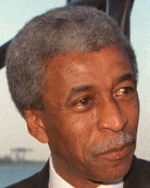
By Adrian Walker, Globe Staff | November 25, 2008
The federal corruption investigation unfolding in City Hall and on Beacon Hill began not with self-righteous fury, but simple frustration. Ron Wilburn's attempts to get a liquor license for a Boston nightclub were met with the kind of soul-numbing political obstacles that he felt made it virtually impossible for an outsider to get a fair hearing.
Wilburn wasn't an insider with the city licensing officials, so he became one with the FBI.
Wilburn, in his first news media interview, acknowledged yesterday that he was the cooperating witness who handed state Senator Dianne Wilkerson and Boston City Councilor Chuck Turner wads of neatly folded cash that federal authorities allege were bribes. And he pointedly said he does not expect the investigation, in which he played a central role, will end there.
"If other people aren't looked at, realistically, something is radically wrong with the process," Wilburn said yesterday.
As Turner stood on City Hall Plaza yesterday, lashing out at the news media and his colleagues on the council, Wilburn sipped a cup of coffee in a Back Bay steakhouse and talked matter-of-factly about the unusual role that has come to be the defining event in his life.
He is 69 years old, a respected businessman in Boston's predominantly black neighborhoods, a mentor to young minorities. Yet he has little sympathy for the two politicians - both of them black - who have already been ensnared in the investigation he has helped drive.
"People do things," Wilburn said. "There are decisions, there are choices, and there are consequences." Asked if he was surprised that public officials would allegedly take money to help push a liquor license, he responded quickly. "Hell, no," and let out a hearty laugh.
Wilburn said the idea of opening an upscale supper and jazz club, to be called Dejavu, began to take hold in 2006. But he was rebuffed by the Boston Licensing Board when he sought a liquor license and was frustrated by what he describes as a politicized and antiquated licensing process.
"You're dealing with favoritism, cronyism, classism, and if you don't have the right connections it's very difficult to make things happen," Wilburn said. "The average person that works hard and has a plan to get a license, it's very hard for them to move through that system. And you find out if you have the right people pushing the buttons, things can happen fast."
Wilburn, a trim man nattily attired in an Oxford shirt, tie, and vest, declined to discuss the details of delivering the alleged bribes - how he felt in the lens of surveillance cameras, the sensation of being wired by federal agents. He said repeatedly, "The affidavit speaks for itself," adding, "It reads like the script of a Spike Lee movie."
Wilburn said that federal agents approached him, though he was vague about the circumstances, saying only that they were curious about "political donations." He specifically rebutted one allegation made by FBI agents, that he told investigators that Wilkerson routinely took payments from people having business before the Senate. He said he had no such knowledge. Otherwise, he said, the 32-page affidavit that accompanied Wilkerson's arrest speaks for itself.
Wilburn said he did not become an informant because he was under investigation or implicated in any crimes. "I'm not smuggling guns, and I'm not a drug dealer," he said laughingly. "I was not forced or coerced."
Indeed, in a Globe story that first identified him as the cooperating witness, or "CW" in the federal affidavit, those who knew him described Wilburn as a "gentleman" with a "mature" bearing who was widely known as an enterprising figure in Boston's black business community. He had grown to be something of a friend and political supporter of Wilkerson in particular, hosting fund-raisers for her at a nightclub he was managing. He was a political contributor to Wilkerson as well.
Yesterday, Wilburn stressed that he had few dealings with Turner, and no ax to grind against either Wilkerson or Turner.
While he insists that he cooperated freely, Wilburn makes no secret of feeling burned by the federal government. The affidavit released the day of Wilkerson's arrest left little doubt that Wilburn was the cooperating witness, or "CW."
"It may as well have said RW," he said, referring to his initials. "They gave me up. It usually goes to the grand jury, and then an indictment is handed down. It didn't happen that way, and who was exposed? Me. I didn't take any bribes, OK? All I was trying to do was get a license."
While Wilburn suggested that the probe may have targets beyond those already charged, he declined to name them.
"I did this not to expose anybody or entrap anybody, but just to expose how the system works," he said.
While some observers have speculated that the case could undermine a generation of black political leadership, Wilburn seemed unfazed by the prospect. "If that happens, it happens," he said. "If there was group involvement, it is what it is."
Rather, he believes that a new generation of leadership might be a healthy development. "There is no entitlement here," Wilburn said. "There needs to be an infusion of new ideas. The whole political situation needs to be looked at. You need new people. I'm an old guy. You need young people, a new generation with new ideas."
Wilburn says he is out of the nightclub business. By the time Dejavu got a full liquor license last March, economic concerns had sunk the project. He describes himself as semiretired, though he said he is looking at two business deals. Neither, he said, involves a liquor license.
Adrian Walker can be reached at walker@globe.com.
Monday, November 24, 2008
Wilkerson banned from Mass. State House
It is quite possibly, as so many surmise, the increasingly popular 'play crazy' defense strategy.
If it's that kind of ruse, it's redundant, and the saga is astonishingly crazier and stupider than first it seemed.
Were it theater, that statehouse scene would have come off far better if the entourage had dramatically whisked her to McLean hospital, before her health insurance expires, with the Beacon Hill Press Corp in tow.
Proponents of the 'crazy ploy' theory - stay prominent in the media until other, more powerful ones fall and take more of the heat, which is also crazy, but far more interesting - are probably on to something.
In either or neither case, Bostonoids are riveted to what may end up quickly and profoundly changing the composition of the Massachusetts Legislature.
Luridness and intrigue aside, this may be a heaven sent opportunity for Black Boston to move beyond the pied piper politics of mindless and ineffective militancy.

Saturday, November 22, 2008

Friday, November 21, 2008

FBI arrests City Councilor Chuck Turner

November 21, 2008 08:15 AM
By Shelley Murphy, Jonathan Saltzman, and Andrew Ryan, Globe Staff
The FBI arrested longtime Boston City Councilor Chuck Turner early this morning at City Hall in connection with a growing federal corruption probe.
Turner was arrested at 7 a.m. in connection with an undercover sting that lead to the arrest last month of state Senator Dianne Wilkerson, according to special agent Gail A. Marcinkiewicz, a spokeswoman for the Federal Bureau of Investigation.
Turner is expected to make his initial appearance today in US District Court in Worcester before Magistrate Judge Timothy Hillman, who is handling Wilkerson's case.
A law enforcement source said that Turner is expected to charged with extortion and lying to FBI agents in an undercover sting involving a liquor license for the nightclub Dejavu. Wilkerson was ensnared in the same operation and ultimately charged with accepting eight bribes worth $23,500 in a case that also included accusations that she pushed legislation paving the way for a Roxbury development.
Turner was videotaped taking a bribe in the Dejavu sting , the source said. After Wilkerson's arrest, Turner was questioned by FBI agents about the alleged bribe and he denied accepting it.
Wilkerson resigned on Wednesday after nearly 16 years under mounting pressure from her colleagues in the Senate.
Turner has served in the City Council since 2000, representing District 7, which includes Roxbury, Lower Roxbury, and parts of the Fenway, South End, Dorchester.
Thursday, November 20, 2008

Wednesday, November 19, 2008
Monday, November 17, 2008
Dianne Wilkerson says she can’t afford lawyer

Dianne Wilkerson says she can’t afford lawyer
By Laurel J. Sweet | Monday, November 17, 2008 | http://www.bostonherald.com
State Sen. Dianne Wilkerson, whose checkered career crashed last month when an FBI photo of her allegedly stuffing $1,000 into her bra was made public, now tells a federal judge she’s too poor for her lawyer.
Attorney Max D. Stern is sticking by Wilkerson, however, and Friday asked U.S. District Court Magistrate Judge Timothy S. Hillman to appoint him the charity case.
Hillman has not yet responded. Reached yesterday, Stern declined to comment.
Since her arrest Oct. 28 on extortion and public corruption charges, all new court filings - including the lame-duck pol’s financial affidavit supporting her want of legal aid - have been completely or partially sealed.
Wilkerson, 53, whose days on Beacon Hill are numbered with this month’s election of political neophyte Sonia Chang-Diaz, 30, of Jamaica Plain to succeed her in the 2nd Suffolk Senate seat, is not due back in court until Dec. 8 for a probable cause hearing. She’s been keeping court staff plenty busy in the meantime.
Little remains intact of the four-page conditions of release Hillman set for Wilkerson less than three weeks ago after she was accused of taking $23,500 in bribes from undercover operatives to sway a real estate deal and secure a nightclub liquor license.
She was ordered to maintain her residence in Boston, but is now asking Hillman to allow her to live at two additional addresses, both of which are sealed. A ruling from Hillman is still pending.
Wilkerson was originally forbidden to have contact with any potential witnesses in her case. But Hillman has relaxed that condition to let her mingle with 17 of the government’s witnesses, whose names are all sealed. The two sides may not discuss the ongoing investigation.
She was barred from tearing up any piece of paper or document in her State House office or at her home, including personal bills and newspaper advertisements. Now, however, Hillman is permitting Wilkerson to “separate any documents that she wishes to dispose of,” and letting prosecutors sort through the waste for anything they want to keep as potential evidence.
Article URL: http://www.bostonherald.com/news/politics/view.bg?articleid=1132833
Subscribe to:
Posts (Atom)
-
A Hollow Inheritance: The Legacies of the Tuskegee Civic Association and the Crusade for Civic Democracy in Alabama by Gabriel Antoine Smi...
